Nonna Maria’s Basil Pesto

A family treasure passed down with love, just as my Nonna Maria used to make it.
There are recipes that are written down, and recipes that live in gestures. Nonna Maria’s pesto belonged to the second kind.
She never measured basil by grams, or olive oil by millilitres. She measured by scent, by colour, by the way the sauce moved inside the bowl. The kitchen would fill with the perfume of crushed basil, garlic, pine nuts, and summer, the kind of smell that tells you lunch is almost ready before anyone calls you to the table.
Her secret was to add one small basil leaf at the very end, without crushing it.
She used to say that pesto needed “a fresh breath” before reaching the table. So, after blending everything, she would tear one tiny basil leaf by hand and stir it in gently. Not enough to change the recipe, just enough to wake it up.
In our family, pesto was never just a sauce. It was a small ritual. The basil had to be handled gently. The olive oil added slowly. The pasta never overheated, because pesto should stay alive: green, fragrant, bright.

Here, I served it with ricotta-filled ravioli, soft and delicate, because they let the pesto speak without covering it. The creaminess of the ricotta meets the freshness of basil, while the extra virgin olive oil brings everything together with its silky texture and quiet intensity.
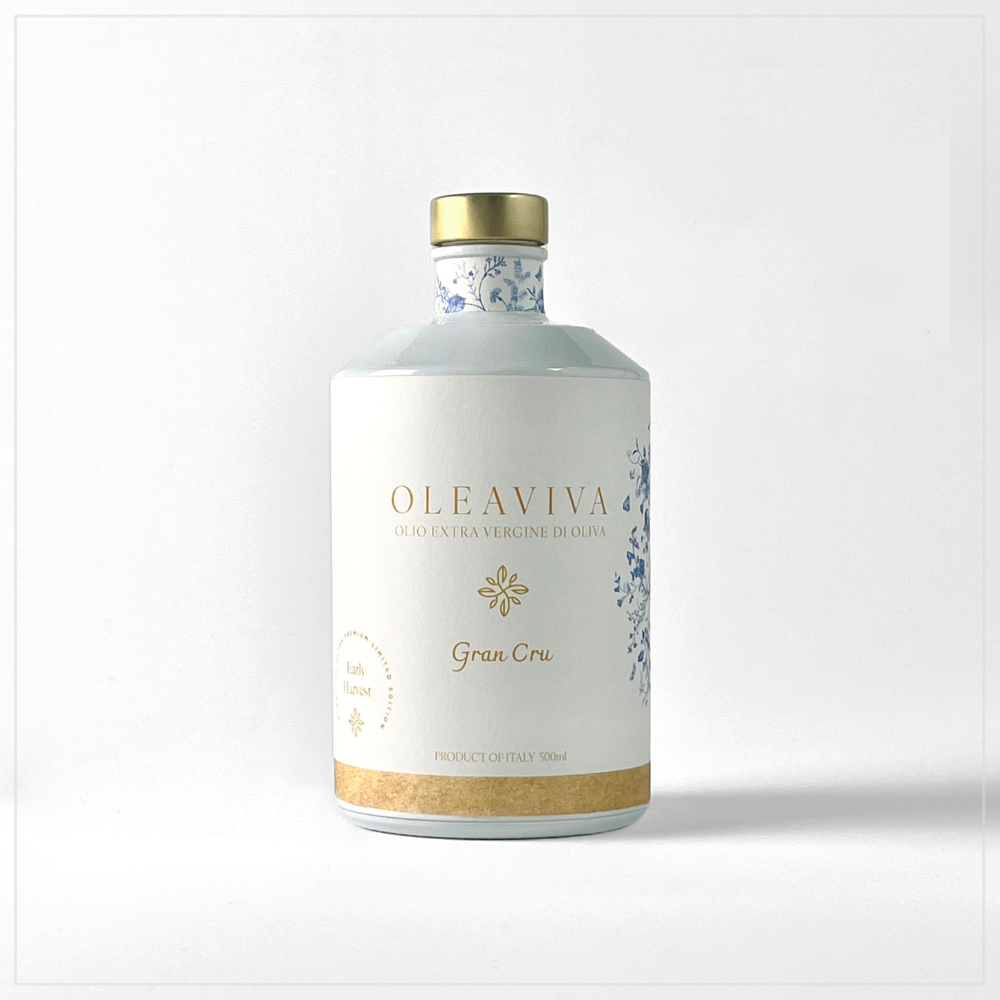
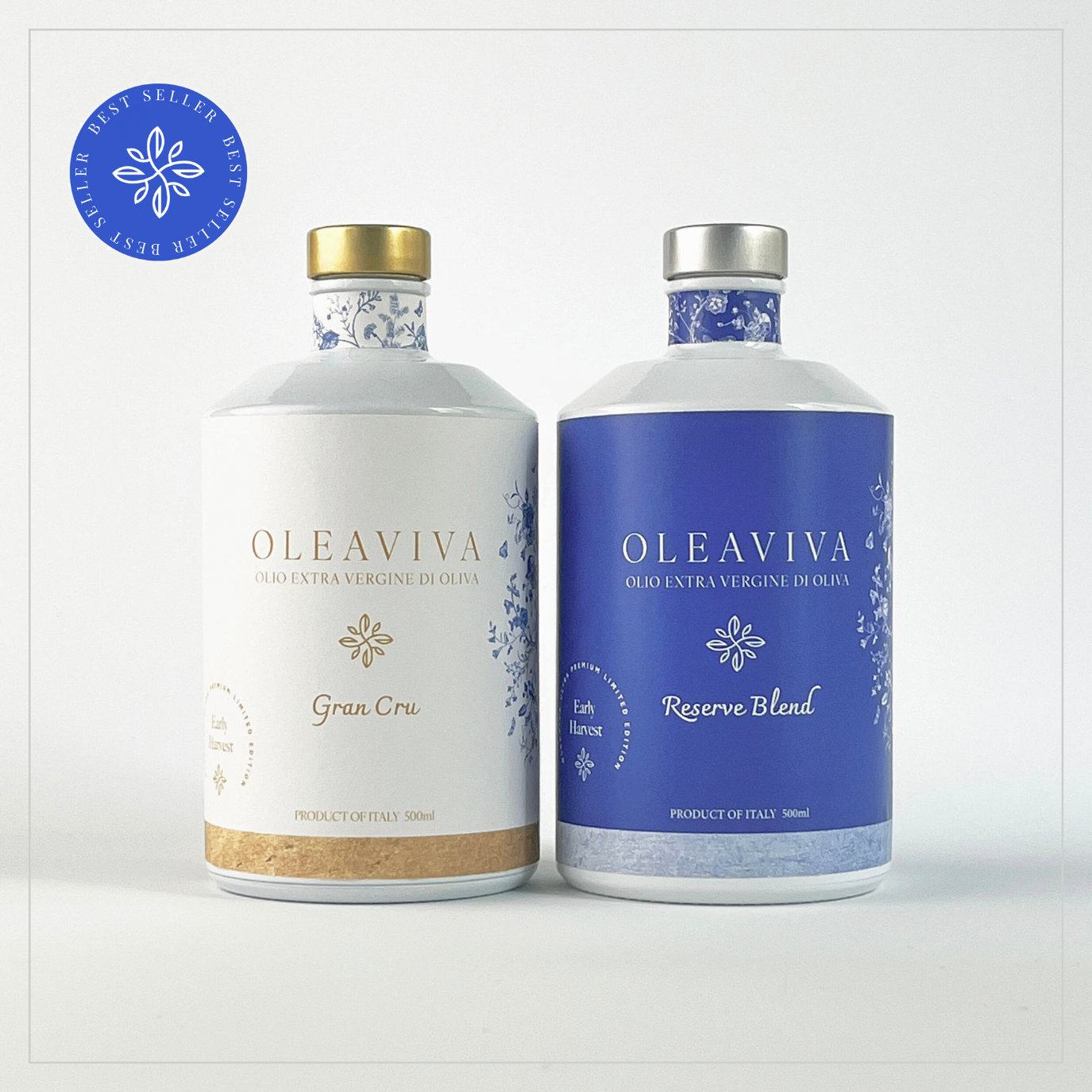
A final drizzle of Oleaviva Grand Cru brings brightness, depth, and a silky finish to the pesto.
Like many things in Italian cooking, its beauty depends on care. It is a simple dish, but never an ordinary one — as long as you don’t forget the last leaf.

Ingredients (serves 4):
- 50 g (about 2 cups loosely packed) fresh basil leaves
- 1 clove of garlic (young and delicate in flavor)
- 30 g (2 tablespoons) pine nuts
- 60 g (1/2 cup) Parmigiano Reggiano, grated
- 20 g (2 tablespoons) Pecorino Sardo, grated
- 100 ml (about 1/2 cup) extra virgin olive oil (delicate and fruity, like Oleaviva)
- A pinch of coarse sea salt
Instructions:
-
Gently wash and dry the basil
Nonna Maria always said: “Treat basil like you’d treat lace — with care.” Rinse the leaves with cold water and pat them gently dry with a soft cloth. -
Start with garlic and salt
In a marble mortar (or carefully in a blender), crush the garlic clove with a pinch of coarse salt until smooth. The salt helps preserve the color and makes the grinding easier. -
Add the basil, slowly
Add a handful of basil leaves at a time. Use slow, circular motions to gently crush the leaves and release their essential oils. This step is key to the pesto’s aroma. -
Blend in the pine nuts
When the basil has become a bright green paste, add the pine nuts and continue until smooth and creamy. -
Stir in the cheeses
Add the Parmigiano Reggiano and Pecorino Sardo. The combination of the two cheeses gives depth and character. -
Finish with olive oil
Slowly pour in the extra virgin olive oil while stirring gently. It should emulsify into a silky, fragrant sauce.
Nonna Maria’s Secrets:
- Never cook the pesto. Always stir it into pasta off the heat with a touch of pasta water for the perfect texture.
- Use a mortar and pestle if possible. Nonna Maria believed that the slow rhythm of the mortar gave the pesto its soul.
- Store in a glass jar, topped with a thin layer of olive oil to preserve its flavor and color.
The Tonda Iblea, our cultivar, carries notes of green tomato, fresh almond, and aromatic herbs. It belongs with basil. It always has.
Oleaviva Grand Cru is available in 500ml.