Why Italians Have Always Known What Scientists Are Only Now Measuring
On olive oil, the body's hunger signals, and a hormone our grandmothers never named but somehow understood.
In many Italian kitchens, olive oil was never treated as a condiment.
It was the beginning of a meal, the final gesture, and often the thing that made everything feel complete.
Vegetables needed it. Bread expected it. Soup came alive with it. Salad was not truly dressed without it.
No one called it wellness. No one spoke about hormones, satiety signals, or metabolic health.
They simply poured it, generously and every day.
And perhaps, in their own way, they already understood something science is now beginning to measure.
The hormone everyone is talking about
GLP-1 is one of the most discussed molecules in nutrition today.
It is a hormone naturally produced by the gut when we eat. Among other things, it helps signal satiety to the brain, slows digestion, and plays a role in blood sugar regulation.
In simple words, it is part of the body's own way of saying: enough.
This is also why GLP-1 medications have become so widely discussed. They act on a pathway that is powerful precisely because it already exists inside us.
But there is another, quieter conversation happening around food: how the way we eat may support the body's natural satiety signals.
And this is where extra virgin olive oil becomes interesting.
What olive oil has to do with it
Clinical research has found that adding extra virgin olive oil to a meal may increase the body's own GLP-1 response, when compared with other fats such as butter. The effect appears to come from the oil itself, when eaten as part of a meal.
Part of the mechanism involves an enzyme called DPP-4, which normally breaks down GLP-1 before it can fully do its work. Studies have shown that polyphenols specific to high-quality extra virgin olive oil — including oleuropein, oleocanthal, and hydroxytyrosol — may inhibit this enzyme, allowing the body's natural GLP-1 to remain active longer.
In a randomised human study on healthy subjects, taking oleuropein — one of the key polyphenols in EVOO — before a meal was associated with higher GLP-1 levels and lower blood glucose compared to placebo, with a corresponding drop in DPP-4 activity.
These are the same compounds that give good olive oil its character: the slight bitterness, the green intensity, the peppery sensation at the back of the throat.
In other words, the qualities we taste are not just flavour.
They are part of what makes extra virgin olive oil different from a neutral fat.
The catch — and it matters
Not all olive oil is the same.
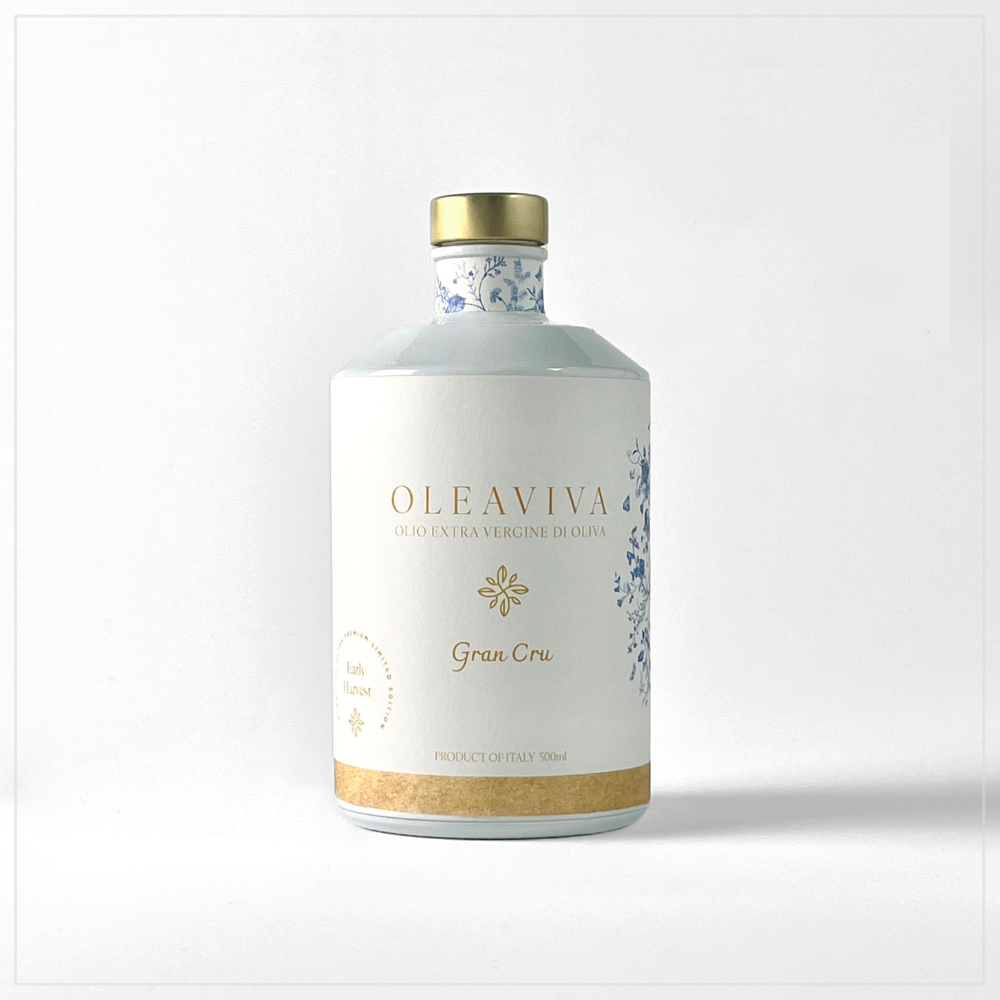
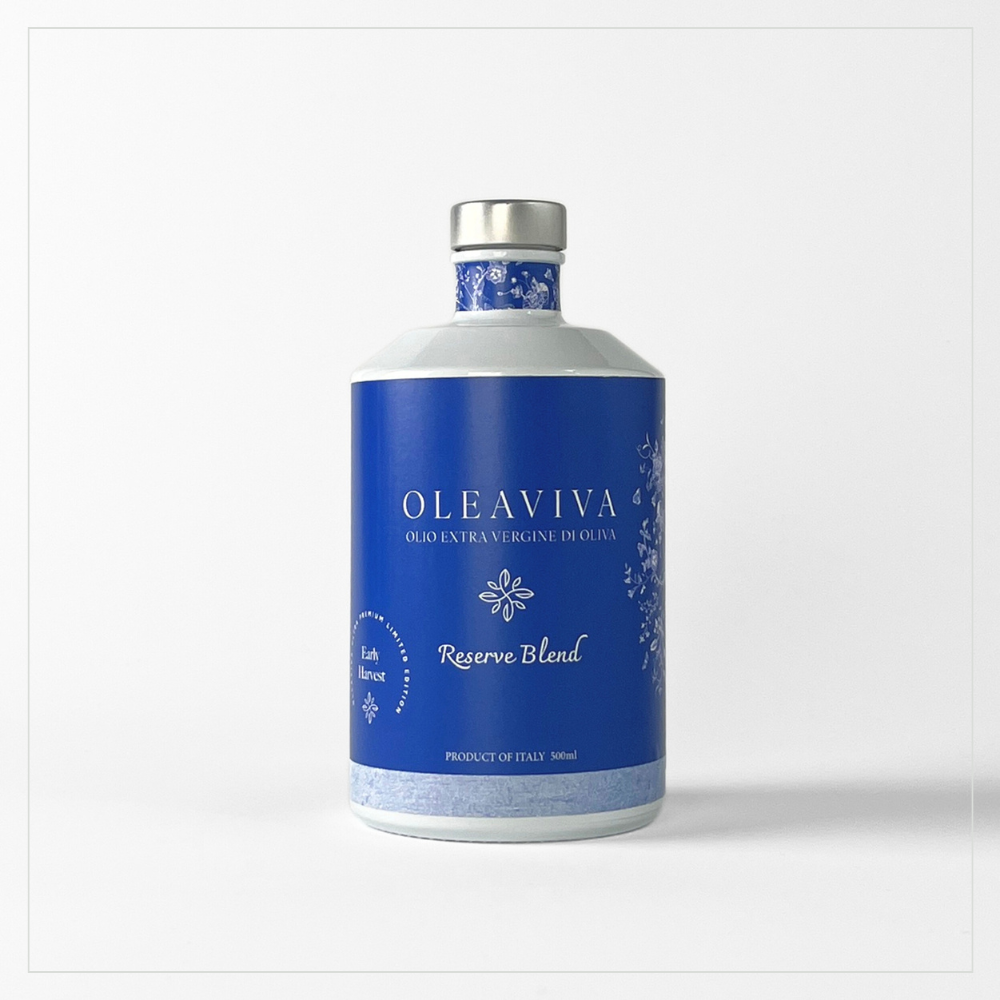
The pale, flat oil in a large plastic bottle is not the same as a fresh, early-harvest extra virgin olive oil made with care and protected from heat, light, oxygen, and time.
Polyphenols are delicate. They decline with poor storage, excessive heat, long delays after harvest, and industrial handling.
This is why freshness matters. This is why early harvest matters. This is why pressing olives quickly after picking matters.
A good extra virgin olive oil should taste alive: green, fragrant, sometimes bitter, sometimes peppery, always expressive.
That intensity is not a defect. It is often a sign of freshness and character.
Two to four tablespoons a day
The quantities often discussed in relation to the Mediterranean diet are not tiny decorative drizzles. They are generous.
Olive oil is used throughout the day: on vegetables, in soups, with legumes, over fish, on bread, in salads, with pasta. Not as an afterthought, but as the primary fat of the meal.
This is how people have eaten for generations around the Mediterranean.
Not by counting tablespoons. By cooking, dressing, dipping, finishing, and sharing.
The research is catching up to the kitchen.
A note on what this is — and what it is not
Extra virgin olive oil is not a medicine, and this is not medical advice.
No single ingredient works in isolation, and olive oil belongs to a broader way of eating: vegetables, legumes, grains, fish, herbs, seasonal food, movement, time, and pleasure.
But it is also true that good olive oil deserves to be used generously and without guilt.
Not because it is a trend. Because it has always belonged at the centre of the table.
A spoonful over soup. A piece of bread dipped in green oil. Vegetables dressed properly. A salad that finally tastes complete.
Your body may understand more than we think.
And somewhere, your grandmother probably already knew.